Thursday, 11 July 2013

Plantas con alma de color


Plants have been a vital resource for humans for thousands of years as they have been part of their main food sources. Besides, in all cultures they have also been used in other aspects of daily life, religious and ceremonial elements, luxuries...and for the extraction of dyes. Since ancient times, in fact, the use of natural substances for the production of colored dyes has crossed all areas of the Mesoamerican world.
In the town of San Juan La Laguna, Solola, a spectacular tradition of natural tinction has survived until today: local women make use of various processes to educe natural colors from plants and elaborate beautiful and famous fabrics, typical for the region of Lake Atitlàn.

Many of the women that today can count on their own business, thanks to the back up of Vision Guatemala, work with weaving and some of them are real connoisseurs of this ancient art, passed from one generation to another.


Today we visited Angela, Amelia and Rosa, three friends and members of our project, who create a cooperative en San Juan la Laguna and they kindly offered to explained us the process of natural thread dyeing with plants.

"Our grandmothers taught us to weave since we were 8 years old and when we got married we received a bit of cotton
as a wedding gift and the necessary tools to spin it. With this material the women should fabricate a suit with the tradicional belt loom for their future husbands. So, as you see, threads, fabrics and weaving are deeply radicated in our culture. They also taught us how to recognize different plants, their functions and their property. That's how we started"
Which are the must common and used plants?

“Ilamo, Encino, Palo de pito, Pericón, Chipilin, Flor de muerto, Achiote, Coco, Cúrcuma, Curcuma, Guayaba, Zanahoria, Canela, Pimienta negra, Sakatint, sacatinta, xq’anich’ o xq’an wi o Barba de león, t-xnoq’chej o mora, Aliso o Q’antze. But it depends on the season and the place, each place has differents plants. We went to other communities to meet women doing the same work, to exchange knowledge and skills."
In a fast and consumerism market as it is in our society, colors are generated by the industry much more rapidly, but with nothing of the quality and beauty of natural colors that plants give to us.

"Today all this, all the hard and long work we do, is not only a way to recuperate our roots, but an essential part of our lives that allow us to be independent and that could help our children to have a better future."

On the pictures below you can follow the steps of the dyeing process to color the cotton thread.
 

"Well, today we will do an experiment! This is a plant we have never used before, but it was suggested by a women from another town. Let's see what happens…"
First we have to cut the plant, the most important part is the stem and the leaf. 
Then we boil it in water for about 20 minutes.
We wash the white cotton thread, then put it in the pot and move it very fast, to let the colour spread all over the fabric.This is a central phase of all the process.
 
Then we have to fix the colour, and to do this we usie ashes or vinegar. Then we repeat the same process for three times, passing the threads from a tray to another.
Listo! The result is gorgeous and our women look satisfied…
A big thanks to the Angela, Amalia, Rosa and to all the women of the Ecological Mayan Texiles of San Juan, to let us take part of their interesting and very impressing work in progress!

<<<<<<<<<<<<<<<<<<<<<<<<<<<<<<<<<<<<<<<<<<<<<<<<<<<<<<<<<<<<<<<<<<<<
Las plantas han sido parte de un recurso vital para los seres humanos durante miles de años, ya que han una  fuente de alimento. Además de esto, en todas las culturas se han utilizado también en otros aspectos de la vida cotidiana, elementos religiosos y ceremoniales y funerarios, lujos y para la extracción de colorantes. Desde épocas muy antiguas el uso de sustancias naturales para la producción de tintes de colores ha traspasado todas las esferas del mundo mesoamericano.

En el pueblo de San Juan la Laguna, Sololá hoy dia permenace una espectacular tradición de tinction natural: las mujeres de ésta población utilizan varios procesos para sacar colores desde plantas y elaborar los hermos tejidos típicos de la región.

Muchas de las mujeres que ya tienen un negocio gracias al respaldo de Vision Guatemala se dedican a tejer y algunas también son conocidoras de esta arte antigua, que aprendieron y tramandaron desde generación en generación.

Hoy estuvimos visitando Angela, Amelia y Rosa, tres amigas y miembros de nuestros proyecto, que nos ensenaron el proceso para sacar colores naturales con plantas.
“Nuestras abuelas nos ensenaron a tejer desde los 8 años y cuando se nos casamos el “regalo”  de bodas incluía  un poco de algodón y los instrumentos necesarios para hilarlo. Con este material la mujer debía elaborar el traje de su ahora esposo en el telar de cintura. Como veràs, hilos, tejidos y tejer son partes fundamentales de nuestra cultura. También nos ensenaron a conocer las plantas, sus funciones y sus propiedad. A es como empezamos nuestro trabajo”.

“Antiguamente las mujeres recolectaban en los parajes circundantes al pueblo cortezas, frutos, follaje y flores de las plantas y árboles locales, de los cuales podían extraer colorantes naturales que empleaban para teñir el hilo de algodón. Yo aprendi con mi abuela, y cuando necesitamos unas plantas subimos al monte, donde crecen muchas plantas para tinturas”

Cuales son las plantas que màs se utilizan?
“Ilamo, Encino, Palo de pito, Pericón, Chipilí, Flor de muerto, Achiote, Coco, Cúrcuma
Curcuma, Guayaba, Zanahoria, Canela,Pimienta negra, Sakatint, sacatinta, xq’anich’ o xq’an wi o
Barba de león, t-xnoq’chej o mora, Aliso o Q’antze. Pero mucho depiende de la temporada y del lugar; nos fuimos en otras comunidades con mujeres que hacen nuestros mismo trabajo, para intercambiar conocimientos y técnicas”.

En un mercado consumistico y rápido como lo que caracteriza nuestro sistema, los colorantes son generados por la industria, mucho màs velocemente y pero no tienen nada de la calidad y de la belleza de los colores naturales que las plantas nos regalan.

Hoy todo esto, todo el trabajo duro y largo  no solo es una manera para recuperar nuestras raicès, sino una parte esencial de nuestra vida, que nos permite de ser autónomas y ayudar a nuestros hijos para que tengan un futuro mejor”.

Aquí todas las fases para colorear el hilo de algodón.
 
"Hoy vamos a hacer un experimento! Esta es una planta que nunca nos habíamos utilizado, pero nos fue sugerida por otras mujeres con que cooperamos.Vamos a ver ver qué pasa

Primero hay que cortar las plantas, la parte mas importante es el tallo y la hoja.
Lavamos el hilo de algodón blanco y luego lo ponemos en el bote y lo movemos rápido para que el color se difunda  por toda la tela. Entonces fijamos el color con ceniza o vinagre y repetimos 3 veces el procedimiento.
Listo! El resultado es magnífico y nuestras mujeres parece satisfechas...

Muchas gracias a Amalia, Angela y Rosa, y a todas las mujeres de Maya Ecological Textiles para enseñarnos sus trabajo!
 

Wednesday, 10 July 2013

Meine Ankunft in San Pedro La Laguna


2. Juli 2013
Was braucht Mann/Frau alles, um eine Nacht zu verbringen?
Ein Bett, ein WC, eine Dusche und ein Lavabo.

Genau diese Einrichtungsgegenstände – und nicht mehr - fand ich im Hostel in Antigua vor, in  welchem ich eine Nacht schlafen musste, da ich zu spät am Abend amkam, um noch nach San Pedro zu gelangen. Auf die Frage, ob ich zu dieser Zeit noch duschen darf, hiess es: „Klar! Nur haben wir in der ganzen Stadt an diesem Tag ein kleines Wasserproblem. Das heisst, es ist keines vorhanden“.

Für eine Nacht jedoch war dies durchaus auszuhalten und ich kam nur mit einem kleinen Kulturschock davon.

Doch dieser kleine Schock verging sogleich, als ich aus dem Hostel trat und die vielen kleinen Strässchen, Lädelchen, die sympatisch lächelnden Einwohner und den imposanten Pacaya, den Vulkan, der sich in der Nähe von Antigua befindet, erblickte.
Am nächsten Morgen ging dann die Reise bereits weiter und nach einer holprigen Fahrt in einem kleinen Mini-Bus erreichte ich San Pedro La Laguna. Dort wurde ich herzlich von den Mitarbeitern von Vision Guatemala empfangen und in mein neues Zuhause für die nächsten zwei Monate gebracht.

Wie ich erfreulicherweise feststellte, ist dieses Haus wesentlich gemütlicher als das Hostelzimmer und verfügte über fliessendes Wasser. Ein ebenso herzlicher Empfang bereiteten mir die zwei Hunde, welche im selben Haus wohnen.

Bereits am nächsten Morgen, nach einem etwa 15-stündigen Schlaf, durfte ich mich im Büro einrichten und mit der Arbeit beginnen. Diese beinhaltete vorerst die Installation der zwei Laptops, die ich aus der Schweiz mitgebracht habe.

Über Mittag wurde mir ein wenig das Städtchen und ein wunderschöner Weg am See entlang, der nur so von Avocados, Mangos, Kaffeepflanzen etc. blüht und sich ausgezeichnet für eine Joggingtour eignet, gezeigt.

So, das wären auch schon meine ersten Eindrücke gewesen. Nun hoffe ich, dass ich während den nächsten Wochen schnell Spanisch lernen werde und ganz viel weitere Erlebnisse und Eindrücke sammeln kann.

9. Juli 2013
Eine Woche später...
Ein etwas fauler Tag!
Um meinen Geburtstag gestern gemeinsam zu feiern, veranstalteten wir spontan ein kleines Fest im Volunteer-Haus.

Dieses entpuppte sich dann aber als doch nicht so klein, wie es eigentlich vorgesehen war. Weil das Zusammensitzen, Essen, Trinken, Gitarrespielen und Plaudern so gemütlich war, zog sich das Ganze bis spät in die Nacht hinein.


Dabei machte ich erste Erfahrungen mit den guatemaltekischen Traditionen. Denn als der Kuchen auf dem Tisch stand, wurde ich aufgefordert, ohne Hände, sondern direkt mit dem ganzen Gesicht den ersten Bissen zu nehmen.
Hier das Resultat!

Es freute mich sehr, meine 24 Jahre - es sind wirklich erst 24! Wir verwendeten nur die alten Kerzen von Nickie's Geburtstag, da wir keine anderen hatten :) -  auf diesem Planet hier in Guatemala mit meinen neuen Freunden feiern zu können!
<<<<<<<<<<<<<<<<<<<<<<<<<<<<<<<<<<<<<<<<<<<<<<<<<<<<<<<<<<<<<<<<<<<<<<<<
2nd of July 2013
What do we need to spend a night somewhere?
A bed, a toilet, a shower and a washbasin.

Just this – and not that much more- is what I found in the hostel room in Antigua.
I had to sleep one night in this hostel, because I arrived too late to reach San Pedro the same day.
The answer to my simple question, if I still could take a shower on that time, was: “Normally it is possible… But today we just have a little problem with the water in the whole town. That means we don’t have any water.”

For one night it was okay and I survived just with a little culture shock.

The little shock passed as soon as I got out of the hostel and I met the small alleys, the various shops, people smiling to me and the imposing Pacaya, the volcano standing near of Antigua.
The next morning the travel continued and after a bumpy trip on a small bus I arrived at San Pedro La Laguna. There, the staff of Vision Guatemala cordially welcomed me and brought me to my new home for the next two months.

I joyful asserted that this house is much more comfortable than the hostel room, it even dispose current water. In the same house are living two dogs, which welcomed me the same cordially way as the staff before.

The next morning, after a little sleep that least around 15 hours, I could manage  to go to the office and begin with work, that included the installation of the two computers I have brought with me.

Over lunch time I’ve been making a little tour of the village and I had the chance to enjoy the beautiful route along the lake. Just beside the route plenty of avocados, mangos and coffee-beans  are  growing.
A perfect route for my jogging, I was thinking. So, these have already been my first impressions.
Now I hope that during the next weeks I’ll rapidly learn spanish and that I’ll collect a lot of experiences and impressions.

9th of July - One week later…
What a lazy day!

To celebrate my birthday yesterday, we spontaneously organized a little party at the volunteer’s house.
But this party at the end wasn’t that little as it was supposed to be. The time we spent together eating, drinking, playing guitars and chatting proved to be so nice and comfortable that it went on till late in the night.


There I made my first experience with guatemaltecan traditions: when the cake appeared on the table, I was invited to take my first bite just with my mouth, without helping with hands...
Here the results!
I was happy to celebrate my 24 years - indeed they are only 24 years old, but we reused the candles from Nickie's birthday :-) - on this planet here in Guatemala with my new friends!

by Darina Meier

Friday, 5 July 2013

La Feria de San Pedro


Do you remember how excited you were as a child when the local fair day finally arrived to your town- the games, the orquestra and the sweets, people smiling, kids running to get the fist free spot on the Fortune Wheel… Do you remember?
Sure you remember, that day we all went crazy!

The Feria of San Pedro is one of the most special ccasions of the year for the locals in town, an old tradition that has certainly changed  during the passing of time, but without loosing its charme and enchantment.

The sreet full of roasted meat, corn or “palomitas” as they call it here, dulces de cocos, lottery,  bagel, sweets, video games galore, tacos, tamales, fried platanos, shooting galleries, plastic toys for kids, traditional music and dance all mixed up with the latest pop songs from the radio.

It is such a big party, and the whole village has been waiting for it for a long time, expecially the children…
Maybe still too young to appreciate and swing themselves with the sound of Marimba, sure not too young to enjoy the magic of dance... And so we went to see the beautiful tradicional Baile del Torito o lo de los Monos, while eating a delicious dulce de platano.
We went to see how the Queen of San Pedro crowned, the most beautiful woman in the town, dressed in tipical clothing. Then we had a round on the Fortune Wheel... Who beautiful San Pedro looks from up here in the sky! After that we felt quite ready to test our luck with the lottery…
And to be honest, lots of luck, all the children won a little something!


Yes, this day, the Fair Day, has something special, something magic, that lets us remember our childness and our children to fly on fantasy wings.
Happy San Pedro Fair Day to all of you, wherever you are.

By Simona

Monday, 10 June 2013

Clean, recycle and... Let's swim!

A sunny day to enjoy the beauty of the lake Atitlàn, while cleaning trash and learn how important is to take care of nature and recycling. Sometimes playing and learning are the same thing!

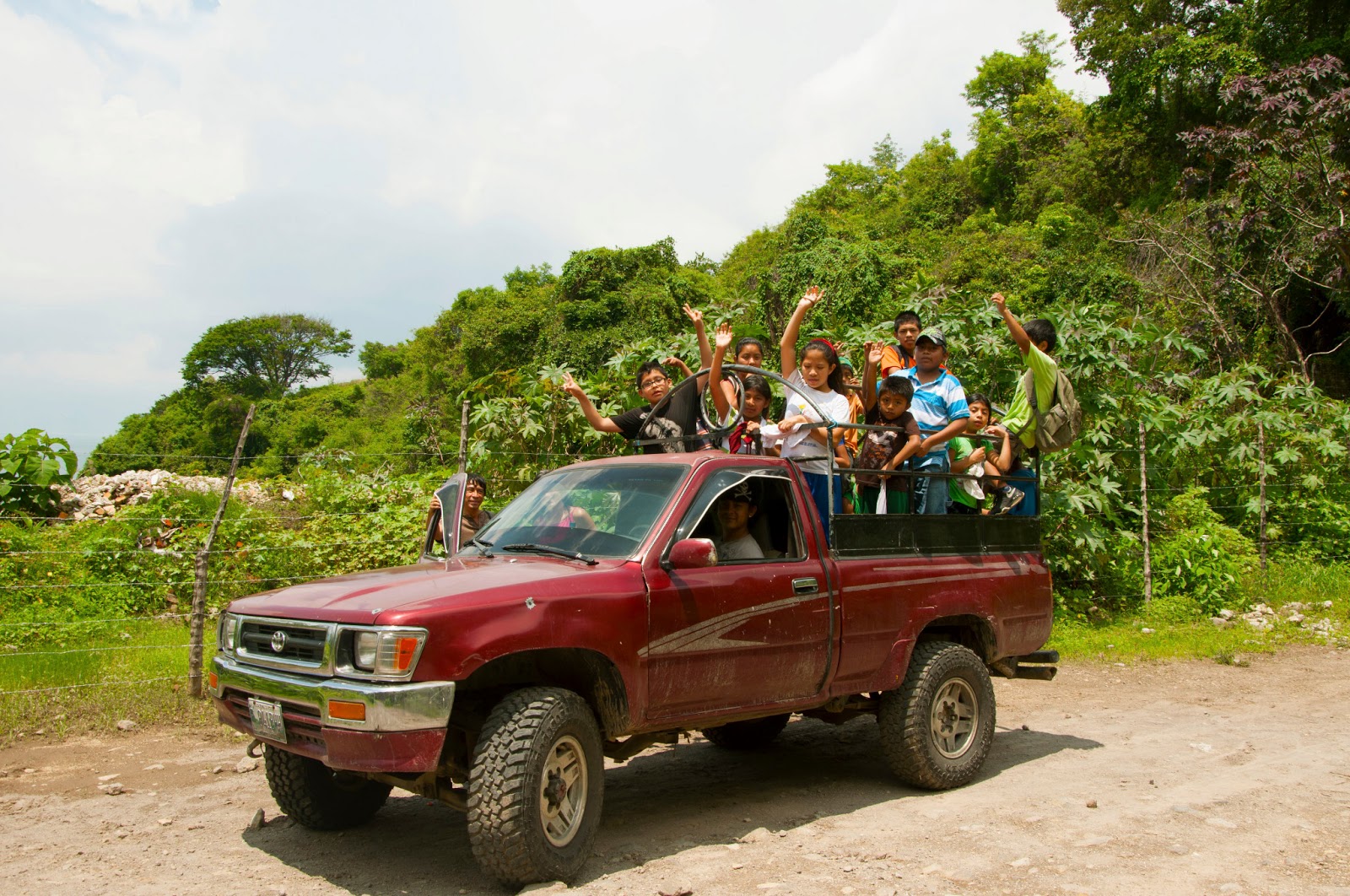
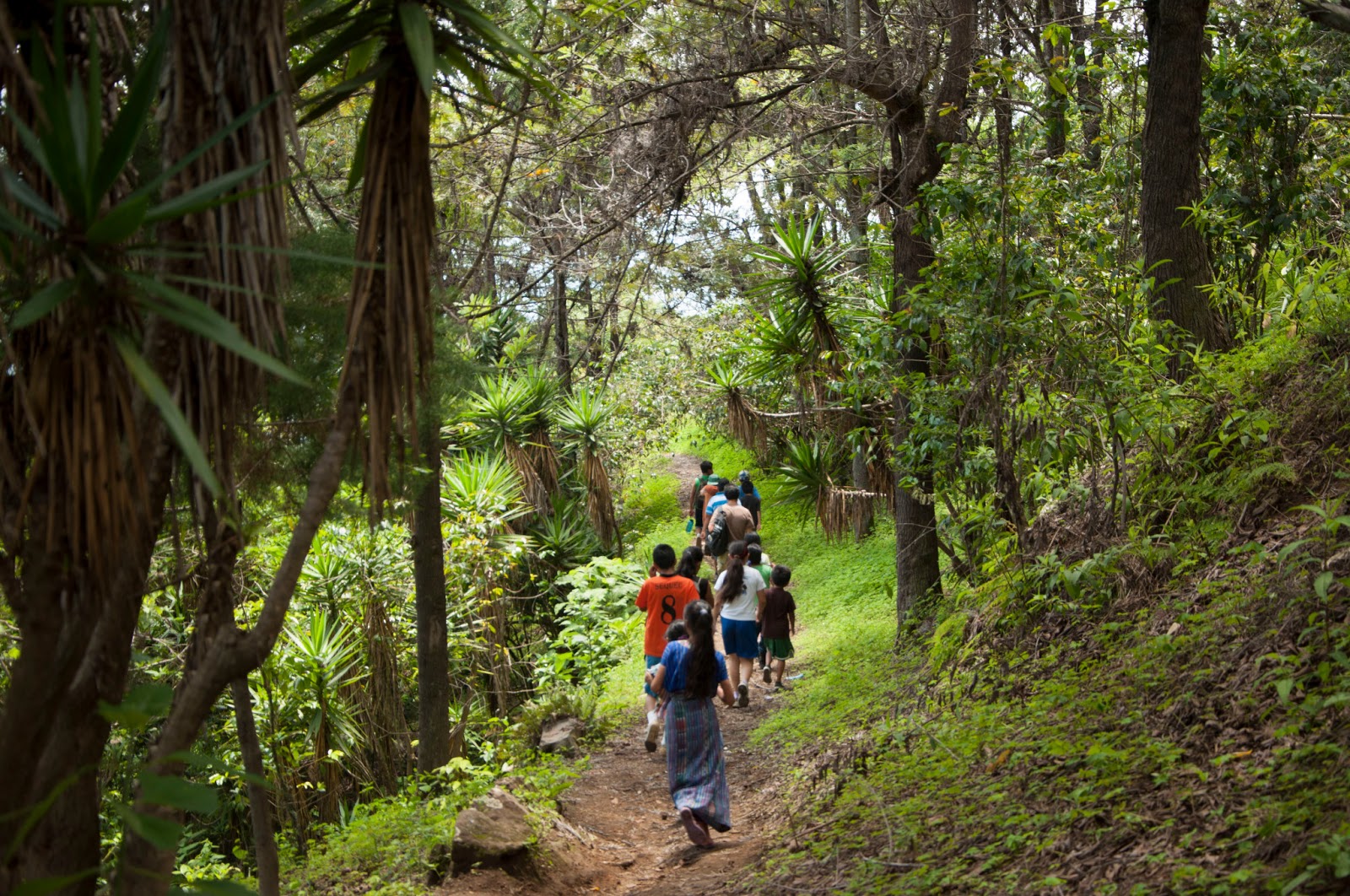
Franklin, our much estimated long time volunteer from Guatemala, took the initiative for our Saturday activity and presented an interesting, exciting program for our kids of all ages. After a bumpy ride in our pickup and a short walk in the selva that winds trough the "cafetales" and giant plants on the finca road of San Pedro La Laguna, we reached a laid back small beach. The kids gathered around Franklin, who explained in simple, understandable words why environmental conciessness is so important today.

Did you know why we separate different trash, and why recycle?
What can we do to reuse rubbish and which are the things we need to throw away?

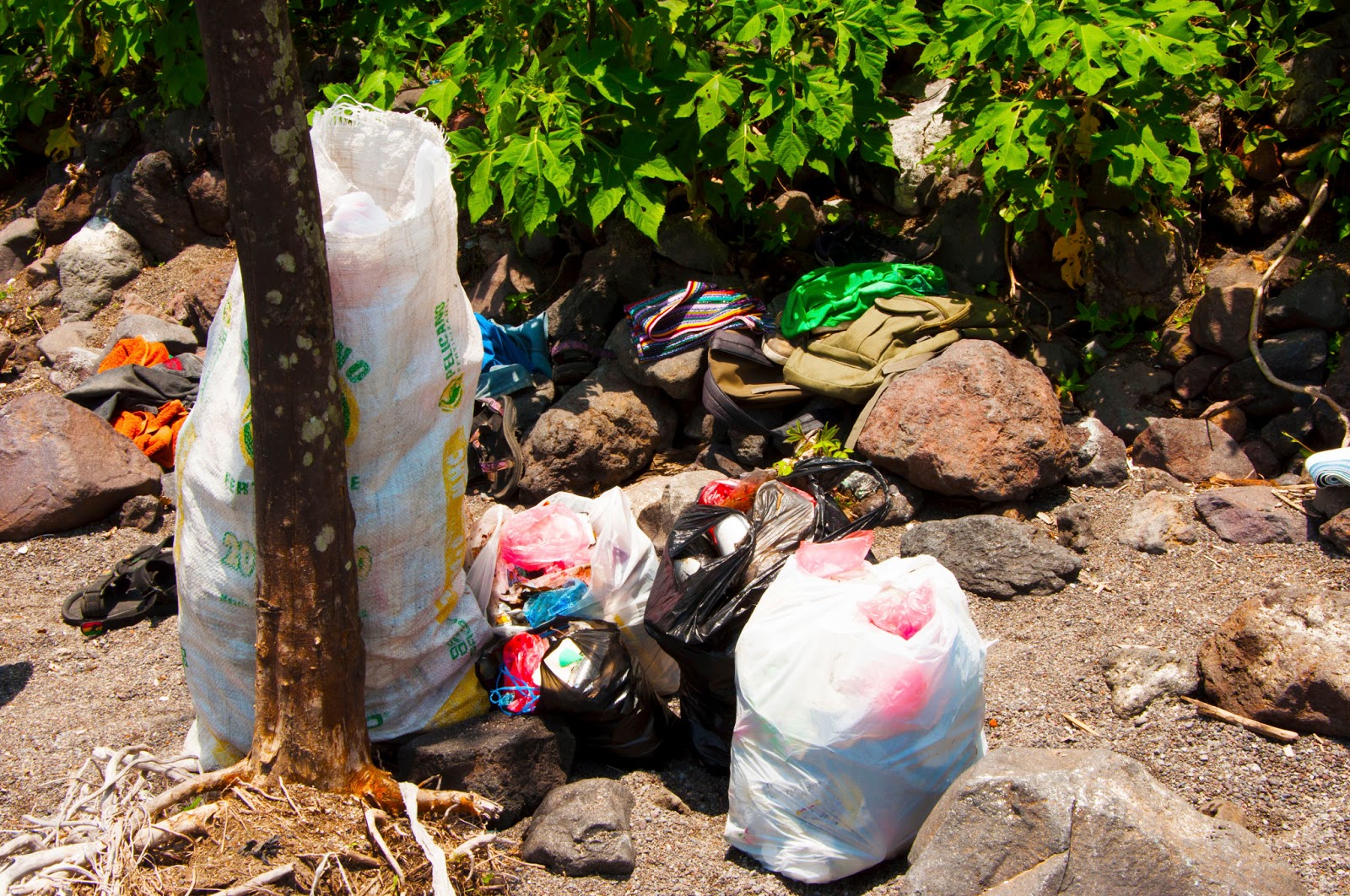
We brought a trash bag and a pair of gloves for everyone. The kids started looking immediately for traces of rubbish, under a shining morning sun.

How many years does it take for a plastic bottle or bag to decompose?
It’ almost unbelievable how long and difficult it is for the Earth to eliminate traces of garbage.

Here  a little list of decomposing timing for different type of trash:
A plastic bag - 500 years
A glass bottle - 100 years
A pair of tights - 70 years
An aluminum can - 50 years
A polystyrene container - 50 years
Chewing-gum  - 30 years
A cigarette filter - 10 years
A paper towel - 3 months
A newspaper - 1 month
A banana peel  - 1 month

“Lake Atitlàn is like a human being, an old and beautiful abuelito living here for many centuries. We need to take care of it, preserve it, make it possible that one day our children will be able to enjoy it too”, says Pablo, one of the youngest participants, while collecting fragments of plastics, glass and paper.

Loads of  work for children, who gave their best and made all their efforts to clean the shores of the lake.

And after the hard work, a well deserved break - everyone jumped into the water!

Nature is everything, we learnt today, and we are part of it, like a unique, giant, perfect human being.
Thank you, children of lake Atitlan! Building awareness is the first step towards a better future!

Thursday, 6 June 2013

Let's make jewelery!

A funny afternoon for the children of Vision Guatemala, in spite of the arrival of the rain and cold!

Today many children of our project came to the workshop of jewelry, to realize with the supervision of Cesar y Tula a lot of  earrings mades with wire, seeds, pearls and to free up their fantasy with originals and coloured creations. 
It was a very exciting moment, we went crazy improvising craftsmen, discover and enjoy the incredible beauty hidden beyond natural seeds.
 

All the jewels are destinated to a group of children of Switzerland, which in the last month have been collecting with their activity many funds to support our project.
With this little gifts we would like to say you “Thank you!”.
We hope you will like our creations!
<<<<<<<<<<<<<<<<<<<<<<<<<<<<<<<<<<<<<<<<<<<<<<<<<<<<<<<<<<<<<<<<<<<<<<<
Una tarde bien divertida para todos los niños de Vision Guatemala, a pesar de la lluvia y del frío!

Hoy muchos ninos de nuestro proyecto llegaron al taller de
joyería para realizár bajo de la supervisión de Cesar y Tula aretes de alambre, semillas, perlitas de colores y para librar sus fantasía en creaciónes originales y coloridas.
Todos las joyas son destinadas a los ninos y las ninas de Swissa que con sus preciosos trabajos lograrón recolectar en los meses pasados muchos fundos para ayudar a nuestro proyecto.

Con esto
pequeño regalo queremos decirlos "Gracias"!

Fue un momento emocionante, a nos gustó improvisarnós artesanos y disfrutár la bellezza de las semillas que la naturaleza nos ofrece.
Esperamos que les gusten también!